
Is My Child’s Behavior Normal? When to Worry About Mental Health
This post on childhood mental health is written by Dzifa Monu Awudi
Key Insights
- Big feelings are normal: Tantrums, worries, and mood changes are part of growing up.
- Ask four questions: How long, how intense, how disruptive, and how different from usual.
- Some signs can’t wait: Talk of suicide or self-harm calls for same-day action. Call or text 988.
Every parent has stood in the kitchen at 7 a.m. wondering whether this meltdown is just a rough morning or a sign of something bigger. I know that moment from both sides. I am a mother of three, and I am also a graduate student in school psychology who works with children in schools and in private practice. Much of what worries us is a normal part of growing up, but some of it deserves a closer look.
What does “normal” look like?
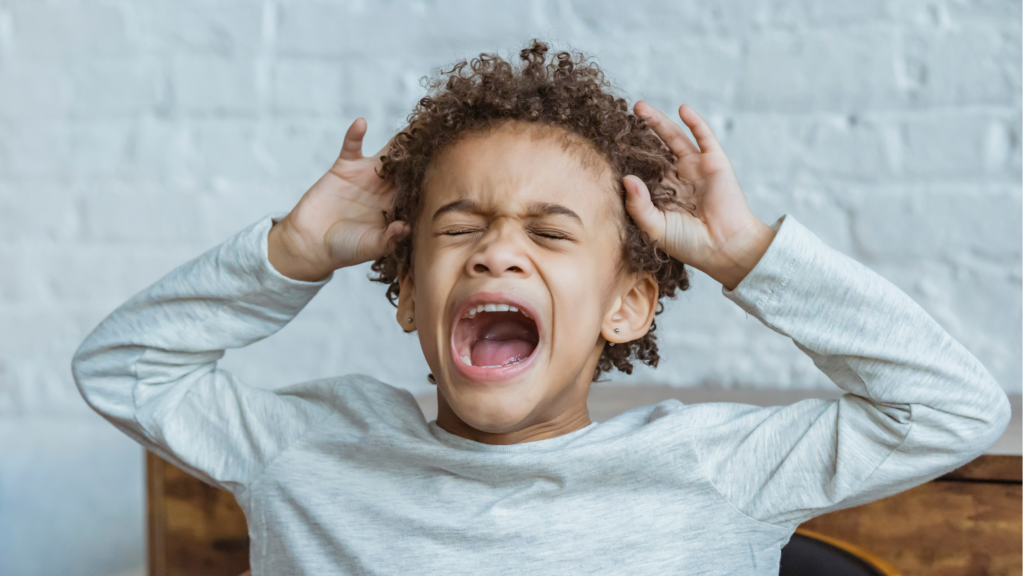
Children are supposed to be big feelers. Toddlers have tantrums because their emotions outrun their words, six-year-olds worry about monsters, and teens pull away and care intensely about friends. Many children have fears, worries, or disruptive moments from time to time. According to the Centers for Disease Control and Prevention (CDC, 2026), it becomes a concern when symptoms are severe, persistent, and get in the way of school, home, or play.
Four questions to ask yourself
- How long has it lasted? A rough week is not a rough two months. Signs that last weeks or months deserve attention (National Institute of Mental Health [NIMH], 2024).
- How intense is it? Is the reaction much bigger than the situation, or hard to calm even with your help?
- Is it getting in the way? Think school, friendships, family routines, and activities they used to love (NIMH, 2024).
- Is it a change from usual? You know your child best. A once easygoing child who is angry all the time is worth noticing.
What are signs it may be time to reach out?

No single sign means something is wrong, but a pattern is worth a conversation with a professional.
- Younger children: Frequent tantrums or constant irritability, ongoing fear or worry, stomachaches or headaches with no medical cause, big sleep changes, or trouble making friends (NIMH, 2024).
- Older children and teens: Losing interest in things they enjoyed, low energy, spending more time alone, big sleep changes, risky behavior, or using alcohol or drugs (NIMH, 2024).
What should I do right away?
Some signs should never wait. If your child talks about wanting to die or hurting themselves, or you find signs of self-harm, act the same day. Asking directly about suicide does not plant the idea (Dazzi et al., 2014). Call or text 988, the Suicide & Crisis Lifeline, any time (988 Suicide & Crisis Lifeline, n.d.). If your child is in immediate danger, call 911.
Why does reaching out early matter?

Research shows that half of all lifetime mental health conditions start by age 14 (Kessler et al., 2005), and the earlier treatment begins, the more effective it can be (NIMH, 2024). Reaching out does not mean you did something wrong. As a parent, I know how easily we blame ourselves. Childhood mental health conditions can be treated and managed (CDC, 2026).
What can I do this week?
- Stay curious, not alarmed. Try, “I’ve noticed you seem more worried lately. What has that been like?” Then listen more than you talk.
- Keep routines steady. Regular sleep, movement, and family time support well-being (CDC, 2026).
- Call your pediatrician or talk to teachers. They can help you decide whether a comprehensive evaluation makes sense (CDC, 2026).
In Summary
You do not need to be certain something is wrong before you ask for help. If your gut says something has changed, that is reason enough to start a conversation. As both a school psychology graduate student and a mother, I can tell you that you are not overreacting, and you are not alone. If you would like support, our team can talk with you about counseling or an evaluation.
References:
Centers for Disease Control and Prevention. (2026, May 15). About children’s mental health. https://www.cdc.gov/children-mental-health/about/index.html
Dazzi, T., Gribble, R., Wessely, S., & Fear, N. T. (2014). Does asking about suicide and related behaviours induce suicidal ideation? Psychological Medicine, 44(16), 3361–3363. https://doi.org/10.1017/S0033291714001299
Kessler, R. C., Berglund, P., Demler, O., Jin, R., Merikangas, K. R., & Walters, E. E. (2005). Lifetime prevalence and age-of-onset distributions of DSM-IV disorders in the National Comorbidity Survey Replication. Archives of General Psychiatry, 62(6), 593–602. https://doi.org/10.1001/archpsyc.62.6.593
National Institute of Mental Health. (2024, March). Child and adolescent mental health. National Institutes of Health. https://www.nimh.nih.gov/health/topics/child-and-adolescent-mental-health
988 Suicide & Crisis Lifeline. (n.d.). 988 Lifeline. https://988lifeline.org/
Check out our other popular blog posts: